 |
G0MWT, GX0MWT, GB5SM, & GB0MWT
CARS Sandford Mill Information |
|
G0MWT, GX0MWT, GB5SM, & GB0MWT
CARS Sandford Mill Information |
CARS has been fortunate to have a good relationship with the Chelmsford Museums Service.
Whilst CARS normally meets monthly at Oaklands Museum in Chelmsford, their Sandford Mill site has also been a location for CARS activities.
Sandford is both an Industrial Heritage Store and a Science & Education Centre.
Activities at Sandford Mill have included International Marconi Day (IMD) in April, as well as
some science and other events at other times in the year.
Location
As a former waterworks site, the River Chelmer aids HF radio propagation when long wire antennas are strung over it.
The main antenna we have used was a 80/40m doublet which extended over the river, fed from the primary operating
location in the 2MT Writtle Hut. If used, a second HF station utilised a base-fed 20m delta loop via
coax and an SGC tuner.
The "Marconi Writtle Hut"
The Hut then moved to a school and for a number of years was used as a
sports changing room.
The famous England footballer, Geoff Hurst was one who used it in
the 1950s. When the school no longer needed it, it was moved to Sandford Mill.
CR150 general purpose HF comms RX - 1943.
Click here to go back to the TOP of this page.
To RETURN to the Past Events & Sandford Mill Page - Click
Here
To RETURN to CARS Home Page - Click
Here
©Copyright CARS
Introduction
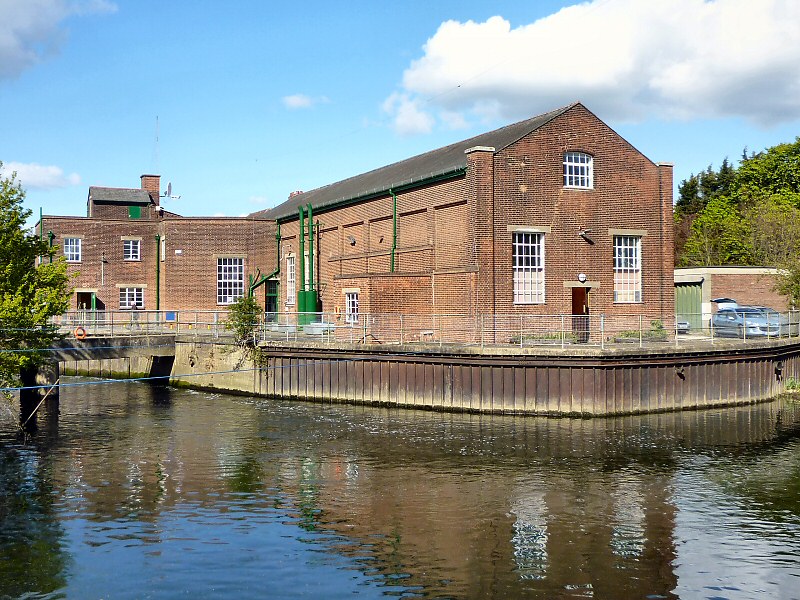
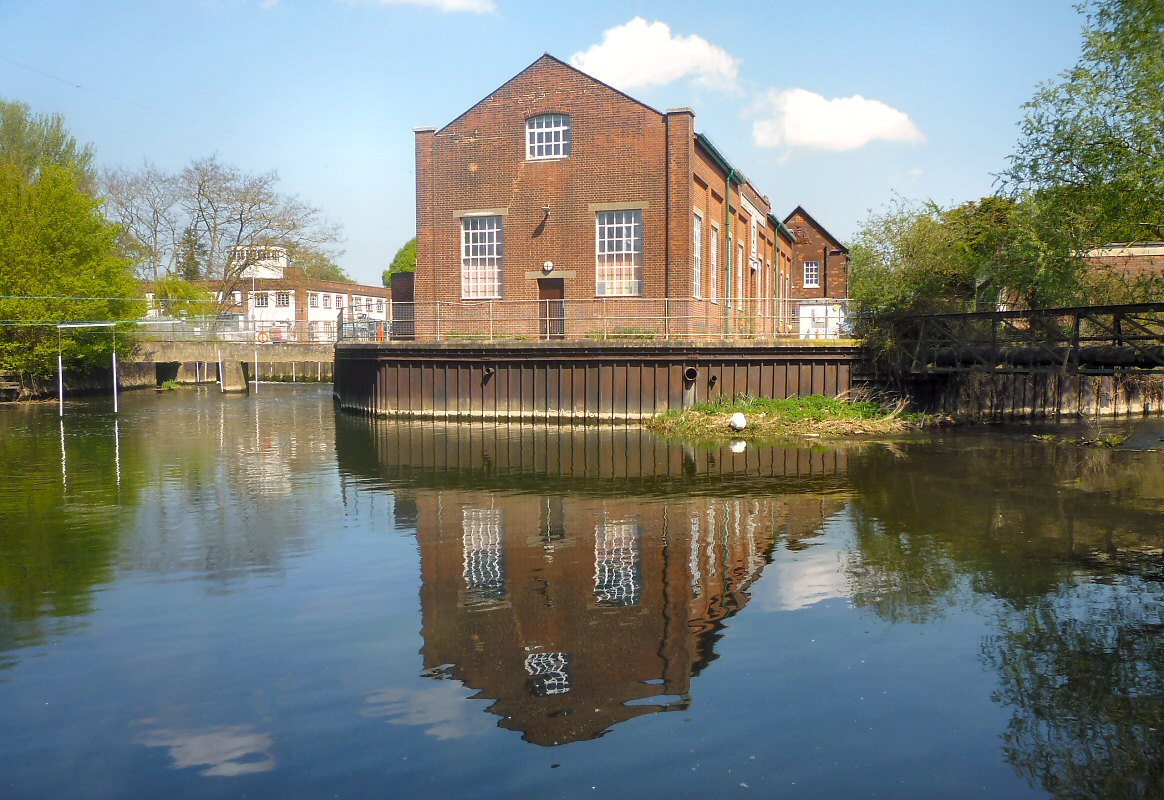
Sandford Mill - which houses "The 2MT Hut"
This hut was one of a number that made up a block at
Writtle in 1921. It was the home to the first official
radio broadcasts in February 1922 under the call-sign
"Two Emma Toc", 2MT. This was led by the late Peter Eckersley
who in 1927 became the BBC's first Chief Engineer.
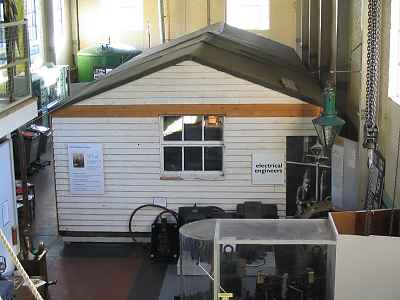
The Marconi Writtle Hut
All photos by John G8DET with thanks to Dr Bowles
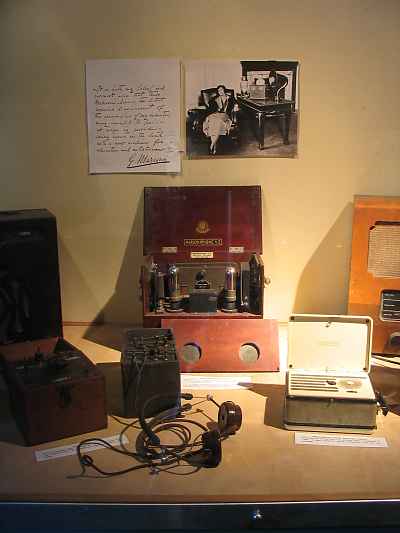
Cabinet of old domestic radios made by Marconi.
The centre radio is a 1922 Marconiphone 2 valve
receiver more than likely made in Chelmsford.
The tuning coils are for 1,300 - 1,700 metres.
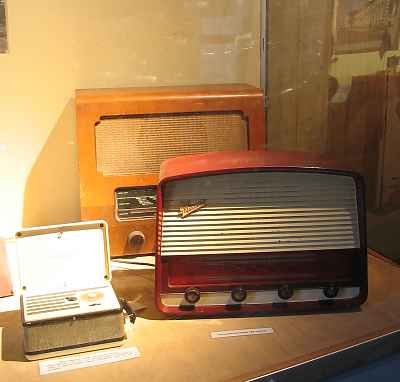
More old domestic radios made by Marconi
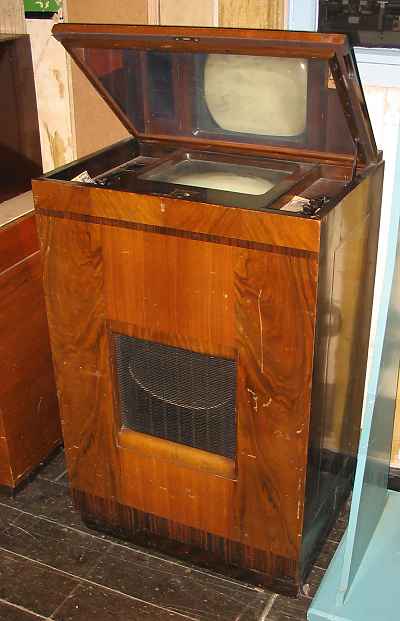
Pre War TV made by Marconi
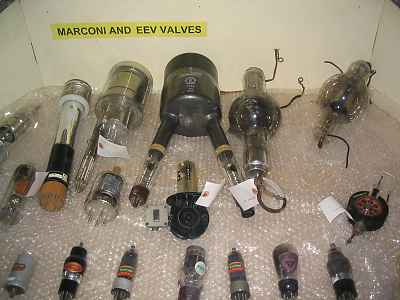
Tray of valves made by Marconi & EEV Company
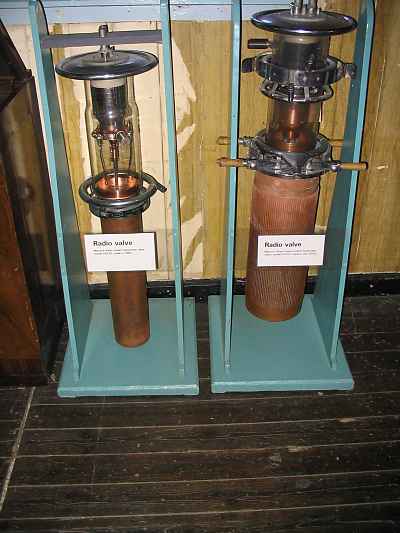
Two large transmitting valves
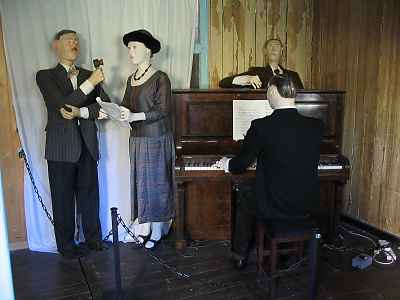
Piano which is said to have accompanied Dame Nellie Melbo
in June 1920. This was sponsored by the Daily Mail.
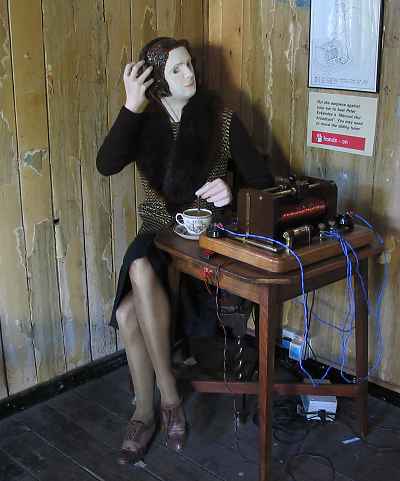
Lady with a cup listening to an early radio receiver.
CARS operate the Amateur Radio Transmitter from a desk near to The Lady.
We now go out of the far door.
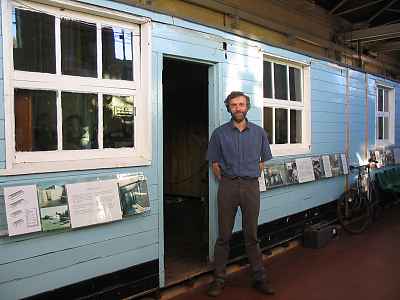
Dr Geoff Bowles with the Marconi bicycle to the right.
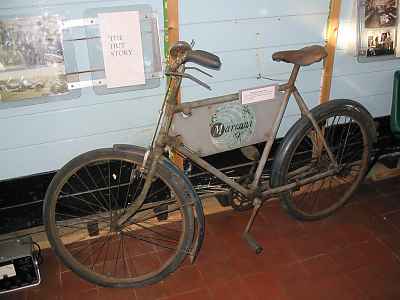
The Marconi Bike.
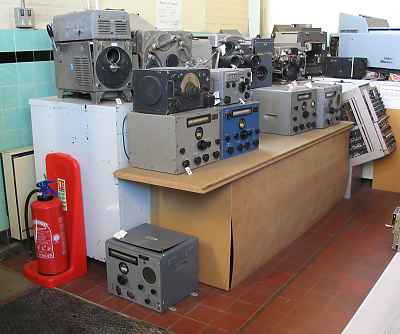
Radios at the rear of the Marconi Hut.
On the floor is a CR300, general purpose marine receiver - 1942.
On shelf, left to right.
Upper - R1155 aircraft RX.
Lower - CR100/2 general purpose comms RX - 1941.
Upper - HR110 general purpose miniaturised comms RX - 1950
Lower - B28 -Naval version of CR100
CR 300, as above.
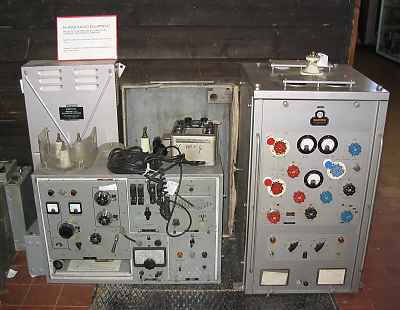
More equipment at the rear.
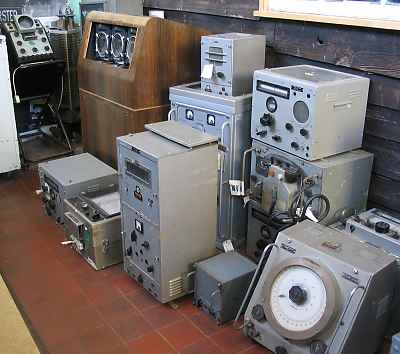
Equipment at the rear of the Marconi Hut. From left to right
Starting at the tall brown box - early TV Projector
Small grey box high up - "Alert" Emergency Guard RX
Box under above - Emergency 130 Watt MF/HF TX
Box in front - Automatic Alarm RX
Box high up with dial & Loudspeaker - CR300
Box under above - "Seamew" TX/RX for trawlers etc.
Box with circular dial - MF Direction Finder "Lodestone"
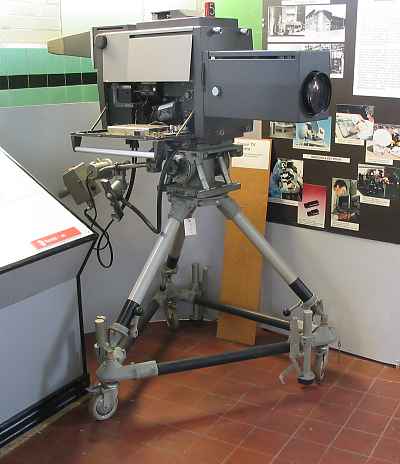
TV Camera
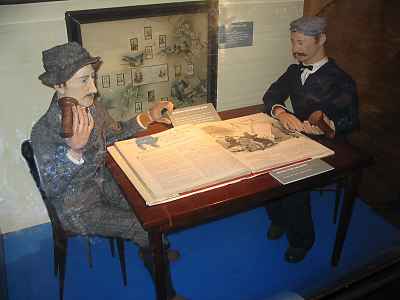
Puppets made for the Post Office for the 1962 Radio Show.
They depict Marconi and his Assistant, George Kemp.
Kemp has gained in stature - he was only 5 feet tall.
Book is "World of Wonder" Annual 1972.
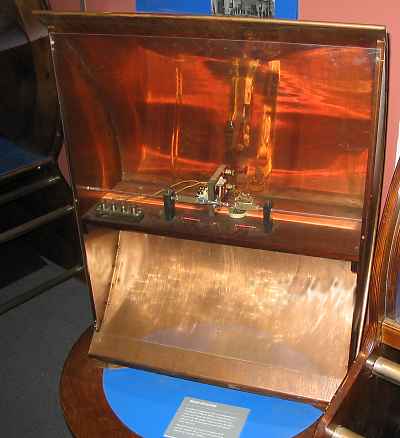
Early Beam Receiver.
A replica of the equipment demonstrated on Salisbury plain in 1896.
A beam of short radio waves from the distant transmitter was
focussed by the copper reflector on to the glass Coherer Tube
in the centre where the signal was detected.
Marconi found that long waves gave a much better range.
Short Waves were not effectively used until the 1920s.
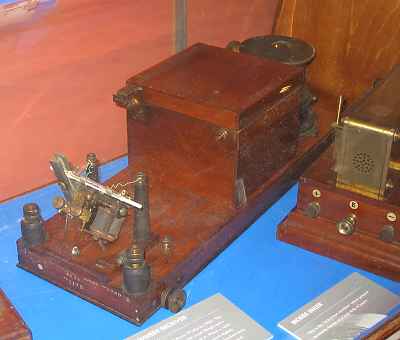
Very early radio receiver - a Coherer.
Made at the Hall Street Works in 1905.
The glass tube was filled with metal filings and a current was passed
through it.
When a radio signal was present the filings passed slightly more current.
An electric bell mechanism then shook the tube ready for the next signal.
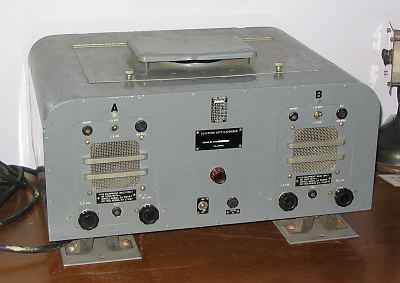
R220 - Do you know what it is or what it does?
If you do, please tell us, thanks.
We now know that it is a dual VHF AM Receiver 70 to 95MHz,
but
that is all. What was it used for?